









Ergebnisse
273 ArtikelSortieren
 1:16:52EN
 Cognitive Revolution "How AI Changes Everything"PodcastMamba After 90 Days: What 30 Papers Reveal About State Space Models, Hybrids, and Mixture of ExpertsModeration: Nathan LabenzNathan Labenz and AI scout Jason Meaux survey the first wave of Mamba-inspired research, from mechanistic studies and synthetic-task tradeoffs to hybrid architectures and MoE variants.
 10:39EN
 Lex FridmanPodcastStatistics as Decision-Making: Michael I. Jordan on Bayesians, Frequentists and the Ideas Between ThemModeration: Lex FridmanBerkeley's Michael I. Jordan explains where statistics came from, why it is really about decisions, and how empirical Bayes and false discovery rate bridge two rival philosophies.
 11:29ENLex FridmanPodcastWhy Tesla AI Day Was the Most Impressive Real-World AI Effort Lex Fridman Has SeenModeration: Lex FridmanLex Fridman walks through the neural network, data annotation, Dojo and Tesla Bot announcements and what they say about solving real-world robotics.
 52:28ENLex FridmanPodcast · 2 StimmenRay Kurzweil on Hierarchies, the Neocortex and Merging with AIGast: Ray Kurzweil · Moderation: Lex FridmanIn an MIT AGI course lecture, Kurzweil connects the history of neural networks to his hierarchical theory of the neocortex, language understanding at Google, longevity, jobs and existential risk.
 1:00:15ENLex FridmanPodcast · 2 StimmenCircuit Search, Hindsight and Self-Play: Ilya Sutskever's Case for Where Learning Is GoingGast: Ilya Sutskever · Moderation: Lex FridmanIn an MIT AGI lecture, OpenAI's co-founder explains why deep learning works, then walks through meta-learning, hindsight experience replay, sim-to-real transfer, self-play and learning goals from human feedback.
 1:48:13ENCognitive Revolution "How AI Changes Everything"PodcastRobotics Hits Its GPT-3.5 Moment: Inside Gemini Robotics, From Embodied Reasoning to OrigamiModeration: Nathan LabenzGoogle DeepMind researchers Keerthana Gopalakrishnan and Ted Xiao explain how Gemini Robotics works, what it can and cannot do, and where the field goes next.
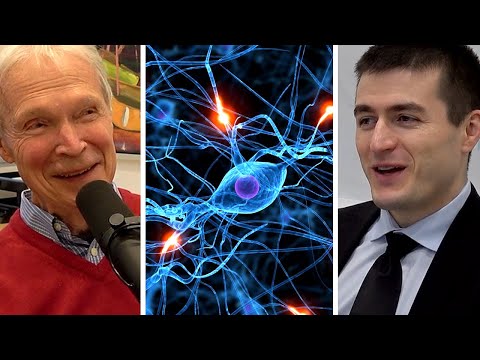 20:50ENLex FridmanPodcastGlitches as Features: What John Hopfield Says Artificial Neural Networks Are MissingModeration: Lex FridmanIn a short conversation with Lex Fridman, physicist and neural-network pioneer John Hopfield compares evolved brains with today's artificial networks and explains why he expects AI to borrow from biology generation after generation.
 1:35:09ENLex FridmanPodcast · 2 StimmenReverse-Engineering the Child: Josh Tenenbaum's Case for Human-Like AIGast: MIT AGI · Moderation: Lex FridmanMIT cognitive scientist Josh Tenenbaum argues that real machine intelligence needs models of the world, built by studying how babies think and learn, not just better pattern recognition.
 32:41ENLex FridmanPodcast · 2 StimmenHow IBM Watson Won Jeopardy: A Moonshot Built on Engineering, Not a BreakthroughGast: David Ferrucci · Moderation: Lex FridmanDavid Ferrucci tells Lex Fridman how he talked IBM into the Jeopardy challenge and how his team built Watson's search, scoring and confidence machinery in about four years.
 1:22:17ENCognitive Revolution "How AI Changes Everything"PodcastOne Set of Weights, Fourteen Medical Tasks: Inside Google's Multimodal Med-PaLM MModeration: Nathan LabenzVivek Natarajan and Tao Tu explain how Google built a single generalist biomedical model that reads images, genomics and text, and what it will take to put it in front of patients.
 1:03:10ENCognitive Revolution "How AI Changes Everything"PodcastPause Tokens, Analogical Prompts and Ring Attention: A Tour of the Transformer's Next UpgradesModeration: Nathan LabenzNathan Labenz and Trey Kollmer walk through five recent papers on pausing, backspacing, prompting, streaming and long-context training, and sketch how they might combine into a more capable model.
 26:45ENLex FridmanPodcast · 2 StimmenStart Small, Build Habits, Pick Your Team: Andrew Ng's Practical Advice for Learning Deep LearningGast: Andrew Ng · Moderation: Lex FridmanIn a clip from the Lex Fridman Podcast, Andrew Ng explains how to begin in deep learning, how to study effectively, and how to choose a career path.
 1:31:29ENLex FridmanPodcastIs Driving More Like Chess or Conversation? Lex Fridman's Opening Lecture on Deep Learning for Self-Driving CarsModeration: Lex FridmanThe first lecture of MIT 6.S094 introduces neural networks, reinforcement learning and computer vision through the question of how hard driving really is.
 1:12:00ENLex FridmanPodcastWhy Deep Learning Works at All: Yoshua Bengio on Composition, Saddle Points and the Case for Unsupervised LearningModeration: Lex FridmanIn a 2016 Deep Learning School talk, Yoshua Bengio explains the assumptions that let neural nets beat the curse of dimensionality and lays out the open challenges ahead.
 45:12EN
 Sequoia CapitalPodcastInside a Robot Data Factory: How Mecka Sensorizes Humans to Train RobotsMecka AI founder Josh Gao explains how a company collects, quality-checks and licenses egocentric human data, and why robotics will arrive as a steady unlock of tasks rather than a single breakthrough.
 1:27:41ENLex FridmanPodcastDeep Learning in 2020: Lex Fridman's Tour of Transformers, Self-Play, Self-Driving and What Comes NextModeration: Lex FridmanAn MIT lecture surveys the biggest advances of 2017 to 2019 across language, reinforcement learning, deep learning theory and autonomous vehicles, and lists Fridman's hopes for the year ahead.
 11:23ENLex FridmanPodcast · 2 StimmenScience Is a Self-Improving System That Isn't Exploding: Chollet on the Limits of an Intelligence ExplosionGast: François Chollet · Moderation: Lex FridmanFrançois Chollet uses the history of science to argue that recursive self-improvement meets exponential friction and yields linear, not explosive, progress.
 51:18ENLex FridmanPodcast · 2 StimmenEngineering Intelligence: Lex Fridman's Opening Lecture for MIT's AGI CourseGast: MIT AGI · Moderation: Lex FridmanLex Fridman lays out an engineering-first approach to artificial general intelligence, previews the course's projects and guest speakers, and frames deep learning's limits.
 1:02:06ENLex FridmanPodcastDeep Learning for Self-Driving Cars: Why Edge Cases and Human Nature Are the Real ProblemModeration: Lex FridmanLex Fridman opens MIT's 6.S094 with a tour of what deep learning is, how it works, what it has achieved and where it still breaks, framed around autonomous vehicles.