








Ergebnisse
45 ArtikelSortieren
 3:05:24EN
 Lex Fridman· 22. Sept. 2021Podcast · 2 StimmenTravis Oliphant wrote NumPy in an empty semester — and still wants open source to payGast: Travis Oliphant · Moderation: Lex FridmanThe creator of NumPy, SciPy, and Anaconda tells Lex Fridman how array thinking, a priced book, and the packaging wars shaped scientific Python.
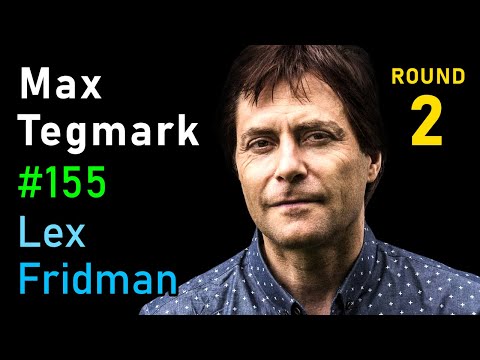 3:02:43ENLex Fridman· 18. Jan. 2021Podcast · 2 StimmenHumanity Cannot Survive on the Right Person Showing Up at the Right TimeGast: Max Tegmark · Moderation: Lex FridmanMIT physicist Max Tegmark tells Lex Fridman why AI should be as well understood as rockets, why 2020 was a warning on weapons and news, and why luck is a terrible long-term plan.
 2:17:42ENLex Fridman· 11. Jan. 2021Podcast · 2 StimmenThe building block of life is a bead on a string, not the whole proteinGast: Dmitry Korkin · Moderation: Lex FridmanDmitry Korkin tells Lex Fridman why protein domains, a triangular spike, and a conservative viral shell matter more than the AlphaFold headline, and why a Nobel laureate once answered a midnight forum post.
 2:39:45ENLex Fridman· 25. Okt. 2020Podcast · 2 StimmenThe obesity gene was never the obesity geneGast: Manolis Kellis · Moderation: Lex FridmanManolis Kellis tells Lex Fridman how one nucleotide a million bases from FTO rewrote obesity biology, and why human genetics is now driving the study of disease.
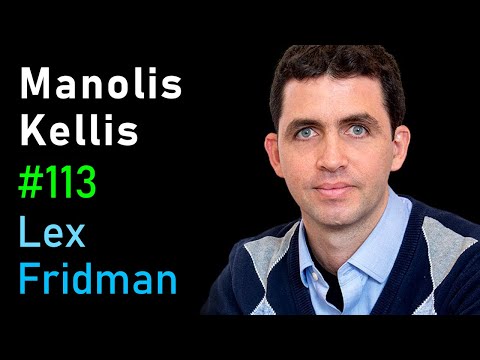 2:29:24ENLex Fridman· 31. Juli 2020Podcast · 2 StimmenWe Are the Descendants of the First Digital ComputerGast: Manolis Kellis · Moderation: Lex FridmanMIT computational biologist Manolis Kellis tells Lex Fridman why life is digital, why any two humans are 99.9 percent identical, and what evolutionary signatures reveal inside SARS-CoV-2.
 1:02:14ENLex Fridman· 30. Juni 2020Podcast · 2 StimmenThe 28-year wait: Robert Langer on rejection, polymers, and a thousand studentsGast: Robert Langer · Moderation: Lex FridmanThe MIT bioengineer talks with Lex Fridman about drug delivery, tissue engineering, patents, and the long path from a Folkman hypothesis to Avastin.
 1:12:03ENLex Fridman· 5. Mai 2020Podcast · 2 StimmenMice Don't Get Alzheimer's: Daphne Koller on Disease in a DishGast: Daphne Koller · Moderation: Lex FridmanThe Coursera co-founder and insitro CEO on why most diseases are not one disease, how to turn cells into data, and why overconfident neural nets can kill.
 2:09:02ENLex Fridman· 22. Apr. 2020Podcast · 2 StimmenA Hundred-Nanometer Machine That Is Not Quite AliveGast: Dmitry Korkin · Moderation: Lex FridmanDmitry Korkin walks through the structural genomics of SARS-CoV-2, from spike-ACE2 docking to drug-binding sites, vaccines, and cruise-ship simulations, recorded in the first spring of the pandemic.
 39:33ENLex Fridman· 22. Nov. 2019Podcast · 2 StimmenMars is not Plan B: Dava Newman on spacesuits, autonomy, and Spaceship EarthGast: Dava Newman · Moderation: Lex FridmanThe MIT Apollo professor and former NASA deputy administrator on Magellan’s crew, mechanical counterpressure, and why the next decade belongs to Earth.
 1:17:29ENLex Fridman· 23. Sept. 2019Podcast · 2 StimmenThe Algorithm Is Already Better. The Clinic Still Uses 1967.Gast: Regina Barzilay · Moderation: Lex FridmanMIT's Regina Barzilay on why deep learning already beats the breast-cancer 'density' score — and why data, liability, and incentives still will not move.
 57:42ENLex Fridman· 12. Aug. 2019Podcast · 2 StimmenA Brain Organoid Is Not a BrainGast: Paola Arlotta · Moderation: Lex FridmanHarvard developmental biologist Paola Arlotta on how the cerebral cortex is built, why timing and mechanical force are part of the code, and why a dish of stem cells is only a window onto that process.
 56:20EN
 No Priors: AI, Machine Learning, Tech, & StartupsPodcast · 2 StimmenBiohub's Bet: Building Open AI World Models of Biology From Proteins Up to CellsModeration: Sarah Guo, Elad GilMark Zuckerberg, Priscilla Chan and Alex Rives explain why Biohub pairs a frontier AI lab with frontier wet-lab biology, and why it releases tools like ESMFold2 as open source.