









Ergebnisse
103 ArtikelSortieren
 42:45EN
 Lex Fridman· 16. Dez. 2018Podcast · 2 StimmenA one-legged robot learned a backflip from "this is better"Gast: Pieter Abbeel · Moderation: Lex FridmanPieter Abbeel tells Lex Fridman why preference comparisons, self-play, ten-minute demos, and messy ensembles of simulators are the practical path through deep reinforcement learning.
 54:03ENLex Fridman· 16. Nov. 2018Podcast · 2 StimmenThe Hardest Part of Learning Was Left Out of the TextbooksGast: Vladimir Vapnik · Moderation: Lex FridmanVladimir Vapnik tells Lex Fridman why intelligence is the work of inventing predicates that shrink the admissible set of functions, not of fitting a rule to a mountain of data.
 42:18ENLex Fridman· 20. Okt. 2018Podcast · 2 StimmenAn Adult Can Change Last Year's Mind. A Network Still Cannot.Gast: Yoshua Bengio · Moderation: Lex FridmanYoshua Bengio tells Lex Fridman that the missing pieces of deep learning sit in credit assignment, training objectives, and a kind of compositionality borrowed from classical AI — not in ten thousand layers.
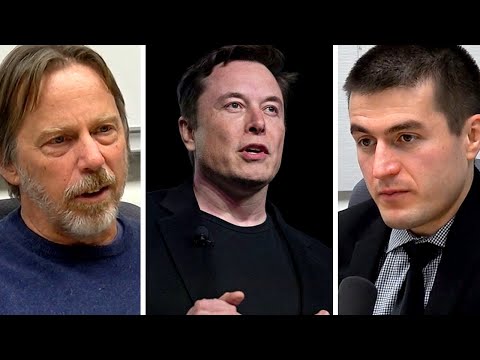 24:22ENLex FridmanPodcast · 2 StimmenCraftsmanship, First Principles and the Road to Self-Driving: Jim Keller on Working with Elon MuskGast: Jim Keller · Moderation: Lex FridmanThe veteran chip architect explains why he thinks autonomous driving is a tractable engineering problem, how Tesla's cost constraints shaped its hardware, and what he took from Musk's way of thinking.
 15:01ENLex FridmanPodcast · 2 StimmenDeep Learning Is a System 1 Machine: Daniel Kahneman on What AI Still LacksGast: Daniel Kahneman · Moderation: Lex FridmanThe Nobel-winning psychologist tells Lex Fridman how his fast-and-slow thinking framework maps onto deep learning, and why driving among pedestrians may require understanding people.
 56:20EN
 No Priors: AI, Machine Learning, Tech, & StartupsPodcast · 2 StimmenBiohub's Bet: Building Open AI World Models of Biology From Proteins Up to CellsModeration: Sarah Guo, Elad GilMark Zuckerberg, Priscilla Chan and Alex Rives explain why Biohub pairs a frontier AI lab with frontier wet-lab biology, and why it releases tools like ESMFold2 as open source.
 1:28:53ENLex FridmanPodcast · 2 StimmenMachine Learning for Business Students: Powerful, Narrow, and Easier to Fool Than You ThinkGast: MIT Sloan · Moderation: Lex FridmanLex Fridman's non-technical MIT Sloan lecture explains how machine learning works, why it is so capable at perception, and where it still breaks in the real world.
 11:11ENLex FridmanPodcast · 2 StimmenYann LeCun on Benchmarks, Interactive Environments, and Why Human Intelligence Is Not GeneralGast: Yann Lecun · Moderation: Lex FridmanIn a 2019 clip, LeCun defends benchmarks as a test of AI claims, explains why interactive environments break the usual train-test protocol, and argues that "general intelligence" is a misnomer.
 1:17:38ENLex FridmanPodcast · 2 StimmenBrains Are Body Regulators: Lisa Feldman Barrett on Why Emotions Are Constructed, Not DetectedGast: Lisa Feldman Barrett · Moderation: Lex FridmanIn a guest talk for MIT's AGI course, neuroscientist Lisa Feldman Barrett explains why faces don't display emotions, why brains exist to run bodies, and what that means for building human-like AI.
 1:10:32EN
 Lenny's PodcastPodcast · 2 StimmenA Billion Dollars, No VC, Under 100 People: Surge AI's Edwin Chen on Data Quality and Where AI Is HeadingGast: Edwin Chen · Moderation: Lenny RachitskySurge AI's founder explains how a bootstrapped team built the leading human-data company, why he distrusts benchmarks, and how reinforcement learning environments are the next frontier.
 10:16ENLex FridmanPodcast · 2 StimmenReasoning Without Logic: Yann LeCun on Teaching Neural Networks to ThinkGast: Yann Lecun · Moderation: Lex FridmanYann LeCun explains why he believes neural networks can reason, and what memory, recurrence and continuous representations would need to look like.
 23:54ENNo Priors: AI, Machine Learning, Tech, & StartupsPodcast · 2 StimmenBeyond GPT-7: The Customization Toolkit, Meta's Open Source Bet and the Return of Consumer AIModeration: Sarah Guo, Elad GilIn a host-only episode, the No Priors hosts map the six levers for 10x to 100x better AI, explain fine-tuning, RAG and AI feedback, and ask why consumer social is suddenly interesting again.
 1:08:06ENLex FridmanPodcast · 2 StimmenDeep Learning in One Lecture: From Perceptrons to AutoML and the Limits of LearningGast: Deep Learning Basics · Moderation: Lex FridmanLex Fridman's opening lecture for MIT's 6.S094 course surveys why deep learning took off, how neural networks learn, and where the technique still falls short.
 10:34ENLex FridmanPodcast · 2 StimmenWhy Deep Learning Needs Rules: Chollet on Interpolation, Abstraction and Hybrid AIGast: François Chollet · Moderation: Lex FridmanFrançois Chollet explains why neural networks only interpolate between points they have seen, and why the best AI systems pair them with symbolic rules.
 52:28ENLex FridmanPodcast · 2 StimmenRay Kurzweil on Hierarchies, the Neocortex and Merging with AIGast: Ray Kurzweil · Moderation: Lex FridmanIn an MIT AGI course lecture, Kurzweil connects the history of neural networks to his hierarchical theory of the neocortex, language understanding at Google, longevity, jobs and existential risk.
 1:00:15ENLex FridmanPodcast · 2 StimmenCircuit Search, Hindsight and Self-Play: Ilya Sutskever's Case for Where Learning Is GoingGast: Ilya Sutskever · Moderation: Lex FridmanIn an MIT AGI lecture, OpenAI's co-founder explains why deep learning works, then walks through meta-learning, hindsight experience replay, sim-to-real transfer, self-play and learning goals from human feedback.
 1:35:09ENLex FridmanPodcast · 2 StimmenReverse-Engineering the Child: Josh Tenenbaum's Case for Human-Like AIGast: MIT AGI · Moderation: Lex FridmanMIT cognitive scientist Josh Tenenbaum argues that real machine intelligence needs models of the world, built by studying how babies think and learn, not just better pattern recognition.
 32:41ENLex FridmanPodcast · 2 StimmenHow IBM Watson Won Jeopardy: A Moonshot Built on Engineering, Not a BreakthroughGast: David Ferrucci · Moderation: Lex FridmanDavid Ferrucci tells Lex Fridman how he talked IBM into the Jeopardy challenge and how his team built Watson's search, scoring and confidence machinery in about four years.
 26:45ENLex FridmanPodcast · 2 StimmenStart Small, Build Habits, Pick Your Team: Andrew Ng's Practical Advice for Learning Deep LearningGast: Andrew Ng · Moderation: Lex FridmanIn a clip from the Lex Fridman Podcast, Andrew Ng explains how to begin in deep learning, how to study effectively, and how to choose a career path.
 11:23ENLex FridmanPodcast · 2 StimmenScience Is a Self-Improving System That Isn't Exploding: Chollet on the Limits of an Intelligence ExplosionGast: François Chollet · Moderation: Lex FridmanFrançois Chollet uses the history of science to argue that recursive self-improvement meets exponential friction and yields linear, not explosive, progress.
 51:18ENLex FridmanPodcast · 2 StimmenEngineering Intelligence: Lex Fridman's Opening Lecture for MIT's AGI CourseGast: MIT AGI · Moderation: Lex FridmanLex Fridman lays out an engineering-first approach to artificial general intelligence, previews the course's projects and guest speakers, and frames deep learning's limits.