








Ergebnisse
15 ArtikelSortieren
 3:15:52EN
 Lex Fridman· 11. Feb. 2026Podcast · 2 StimmenThe Voice Note His Bot Couldn't Handle — and the Agent That Built Itself AnywayGast: OpenClaw · Moderation: Lex FridmanPeter Steinberger tells Lex Fridman how a one-hour WhatsApp toy became GitHub's fastest-growing project, and what it cost him to keep it open.
 3:18:09ENLex Fridman· 30. Nov. 2025Podcast · 2 StimmenA Thing Is Alive When Its Goals Outrun Its PartsGast: Michael Levin · Moderation: Lex FridmanTufts biologist Michael Levin tells Lex Fridman that intelligence is a spectrum of persuadability, that even a bubble sort hosts unexpected goals, and that the brain is a thin client to a space physics does not own.
 2:29:21ENLex Fridman· 6. Dez. 2022Podcast · 2 StimmenThe Poker Bot That Never Tried to Read a SoulGast: Noam Brown · Moderation: Lex FridmanNoam Brown tells Lex Fridman how a Nash-equilibrium bot crushed heads-up no-limit Hold'em, how Pluribus did it six-handed, and why Diplomacy required an AI that could earn human trust.
 3:12:55ENLex Fridman· 21. Okt. 2020Podcast · 2 StimmenThe IQ required to destroy the world drops by one point every yearGast: George Hotz · Moderation: Lex FridmanGeorge Hotz on Fermi's paradox, hacking the simulation, and teaching cars to drive with neural nets.
 4:08:58ENLex Fridman· 22. Juni 2020Podcast · 2 StimmenThe Man Who Named AGI Wants Superintelligence Raised on CompassionGast: Ben Goertzel · Moderation: Lex FridmanLex Fridman talks with Ben Goertzel for four hours about OpenCog, Sophia, SingularityNET, and why a bigger neural net is not a mind.
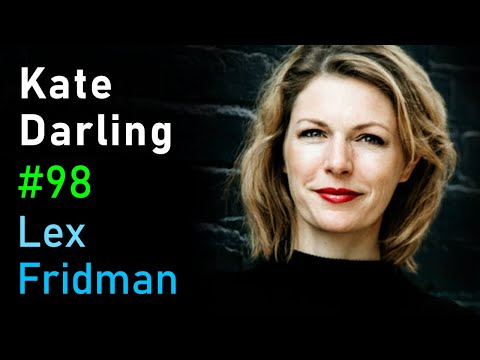 1:12:36ENLex Fridman· 5. Juni 2020Podcast · 2 StimmenKate Darling on Why We Name the Roomba and Mourn the Bomb RobotGast: Kate Darling · Moderation: Lex FridmanAn MIT Media Lab researcher argues that our feelings about machines track the history of animal domestication — and that design can steer that instinct for better or worse.
 1:38:33ENLex Fridman· 19. März 2020Podcast · 2 StimmenMaybe people are rational under different assumptionsGast: Anca Dragan · Moderation: Lex FridmanAnca Dragan talks with Lex Fridman about inverse reinforcement learning, autonomous driving, and why a written reward is evidence rather than law.
 1:39:56ENLex Fridman· 26. Feb. 2020Podcast · 2 StimmenWhy Marcus Hutter Treats Compression as Intelligence ItselfGast: Marcus Hutter · Moderation: Lex FridmanThe DeepMind researcher behind AIXI tells Lex Fridman why a Wikipedia compression contest, Solomonoff induction, and an incomputable formula belong in the same conversation.
 1:45:58ENLex Fridman· 14. Dez. 2019Podcast · 2 StimmenNine of ten colleagues said far-field speech was impossibleGast: Rohit Prasad · Moderation: Lex FridmanRohit Prasad, Amazon’s vice president and head scientist for Alexa, talks with Lex Fridman about conversational AI, the Alexa Prize, trust, and why a 20-minute chat is still years away.
 1:23:01ENLex Fridman· 11. Dez. 2019Podcast · 2 StimmenYou Cannot Ask a Question You Have No Words ForGast: Judea Pearl · Moderation: Lex FridmanA teenager spent three days in bed with a fever after learning that geometry could be done in algebra — then spent a career giving cause and effect a mathematics.
 44:48ENLex Fridman· 22. Juli 2019Podcast · 2 StimmenChris Urmson: The Path to Driverless Cars Splits Away From the One That Lets You NapGast: Chris Urmson · Moderation: Lex FridmanLex Fridman talks with Aurora CEO Chris Urmson about the DARPA races, why lidar is a tool rather than a crutch, and why Level 2 economics will not grow into true autonomy.
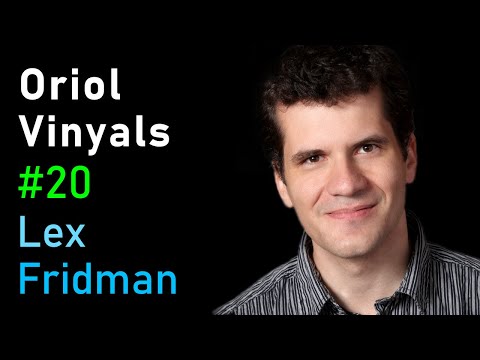 1:46:01ENLex Fridman· 29. Apr. 2019Podcast · 2 StimmenThe Night AlphaStar Beat TLO, the Team Went to a BarGast: Oriol Vinyals · Moderation: Lex FridmanOriol Vinyals on how DeepMind turned StarCraft II into a sequence problem, built a league of agents, and still refuses to call the game solved.
 1:01:24ENLex Fridman· 12. März 2019Podcast · 2 StimmenLeslie Kaelbling: You Buy the Ticket Before You Can Plan the AirportGast: Leslie Kaelbling · Moderation: Lex FridmanThe MIT roboticist tells Lex Fridman why abstractions, belief-space control, and built-in bias matter more than picking a tribe of symbols or neural nets.
 1:06:17ENLex Fridman· 28. Dez. 2018Podcast · 2 StimmenLibratus Beat the World's Best Poker Players Without a Neural NetworkGast: Tuomas Sandholm · Moderation: Lex FridmanTuomas Sandholm tells Lex Fridman how game theory, abstraction, and search — not deep learning — took heads-up no-limit Texas Hold'em, and why the harder work is deploying that toolkit outside the casino.
 1:30:52ENLex FridmanPodcast · 2 StimmenBuilding Minds from Unified Theories: Nate Derbinsky on Cognitive Architectures, Soar, and the Case for ForgettingGast: MIT AGI · Moderation: Lex FridmanA guest lecture in MIT's AGI course on how cognitive architectures try to assemble human-level intelligence, and how studying human memory made the Soar architecture faster and better.